Menu +
Labels and Packaging: Getting Retail-Ready Cargo Right
Retail and marketplace labels carry data, not just branding. Here is what to settle with your supplier before cartons are packed.
Start reading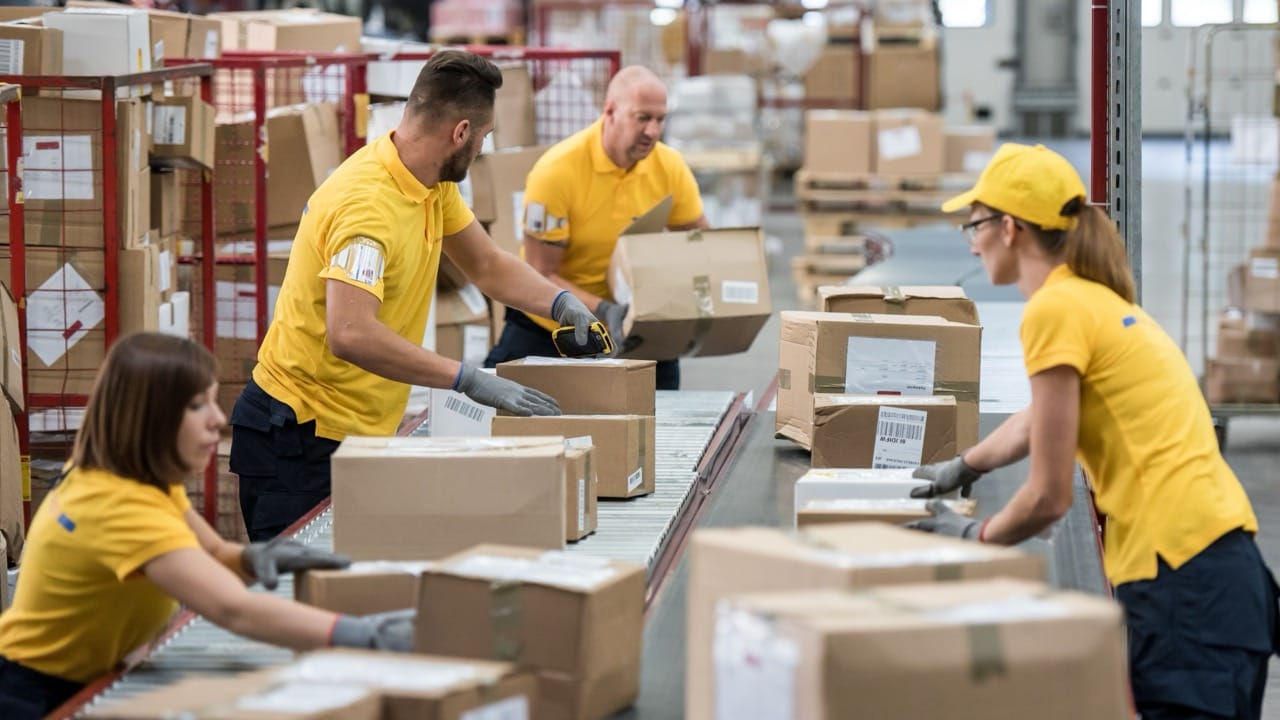

A carton arrives at a warehouse. Someone scans the label. If that label is wrong — missing the barcode, wrong size, wrong address format — the carton does not move. It goes to a problem shelf. The goods inside may be perfect, but the shipment stalls because of a sticker. That is the whole argument for treating packaging and labeling as part of production, not an afterthought.
Labels carry data, not decoration
A barcode label tells the supply chain three things: what the item is, where it is going, and how to handle it. When that data is accurate, the carton moves through sorting, customs, and a marketplace’s inbound dock without a human having to guess. When it is wrong, the same carton creates a delay, a compliance question, or a return.
This matters most when you sell through a marketplace. Retail and marketplace programs usually specify a barcode format, a label size, and where it must sit on the carton or the individual unit. Suppose you order 600 knit pet sweaters in six colours. If each colour needs its own barcode, your supplier needs that data before packing starts — not after the cartons are sealed and strapped. Reopening cartons to relabel them at a consolidation point is slow, and every extra handling step is a chance for a mix-up.
The same logic applies to the unit itself. A polybagged pet hoodie or a folded tulle pet dress needs its own label if the marketplace tracks it at item level. Ask early whether your channel wants carton-level labels only, or item-level labels too. These are different jobs, often done by different people on the line.

Packaging choices that protect the label
- Match the label to the surface. A label that will not stick to a dusty polybag or a soft fabric bag will peel in transit.
- Place labels where scanners can reach them without unpacking. A barcode under tape or on a curved edge is a common failure.
- Keep handling instructions visible. If a carton of silicone pet bowls or stainless bowls must stay upright, the label should say so.
- Confirm the packing list matches the carton labels. One mismatch can hold an entire inbound shipment.
None of this is complicated, but it has to be agreed before production ends. If you are lining up suppliers and want the labeling step built into the order rather than fixed later, it helps to work with a sourcing partner who checks it at the same time as the goods.
Settle the label spec early — format, size, placement, and who applies it. It is the cheapest part of the order and the one most likely to stop it.
Tell us about your product, target market and timeline; we will outline the practical next steps.
Prepare your sourcing briefThe next useful question.
Tell us what you have in mind.
We’ll help map the next step.
Share your product, target quantity, destination and timeline. Whether you are finding a supplier or checking an existing order, a clear brief is a good place to start.
Get the sourcing briefConnect with Jinaria
Send your project brief by email, WhatsApp or Telegram. Downloading a brief does not submit an inquiry automatically.