Menu +
The Finishing Check Before Packing: What Buyers Should See
A finishing table catches defects that AQL sampling misses. Here’s what the factory floor reveals before packing and what to ask for.
Start reading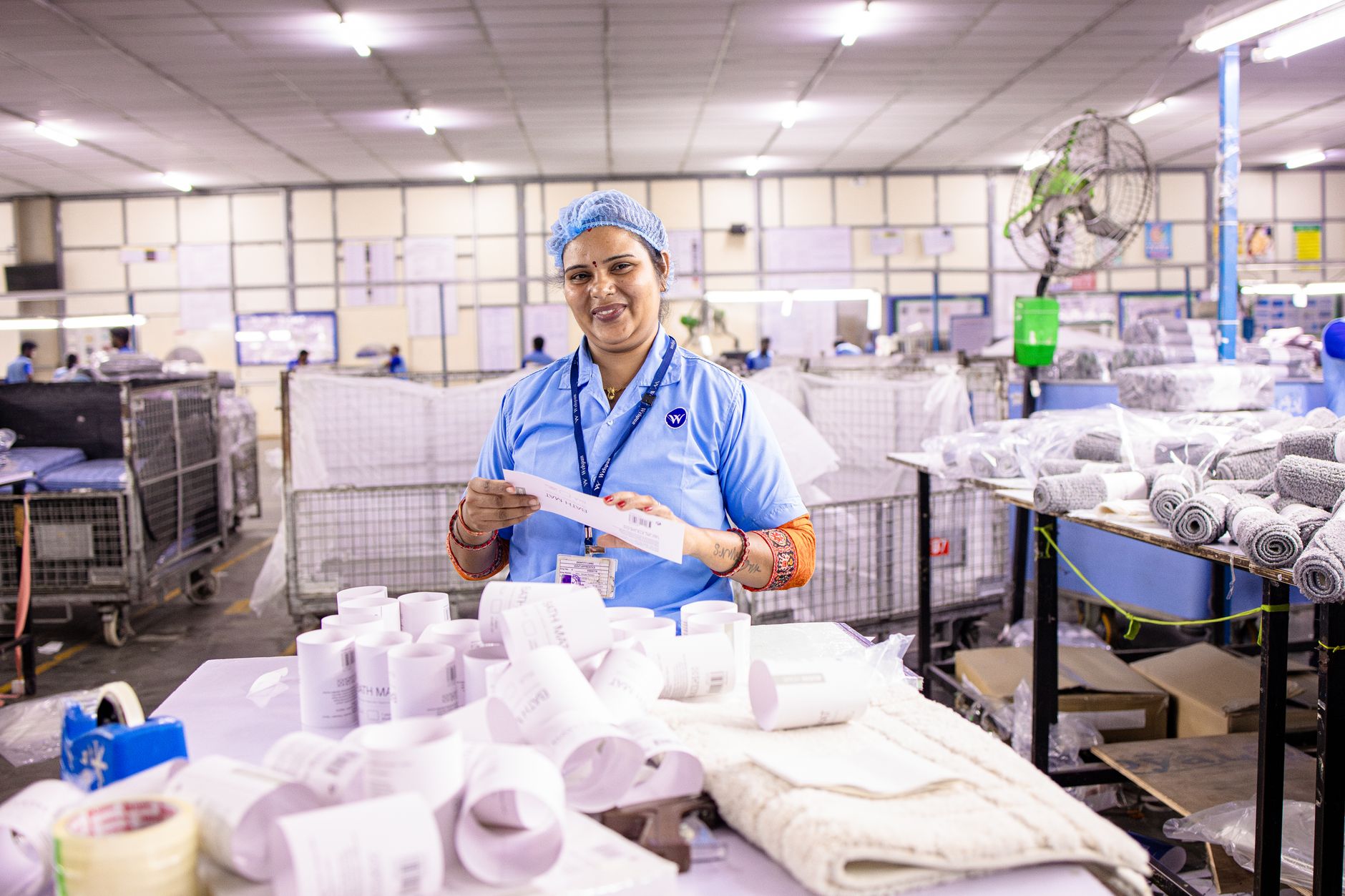
On the finishing floor, the work happens in a narrow window: after sewing, before packing. Garments come off the line in bundles, get turned, trimmed, pressed, and folded. This is where a loose thread, a misaligned zipper, or a skipped stitch gets caught—if anyone is actually looking. The finishing check is not a final random inspection (FRI) with AQL sampling. It is a 100% pass over every piece, and it is the last chance to fix a defect before the garment disappears into a polybag and an export carton.
What gets caught here is usually small: a needle burn, a shade variation between panels, a measurement that drifted half a centimeter. Individually, these are minor. Across a full size run, they become a rejected lot. The finishing table is where the factory decides whether to rework or let it ride. And that decision is often made without the buyer knowing.
What actually happens on the floor
The finishing team works from a stack of approved samples and a measurement spec. Each operator checks seams, trims, and labels by hand. A loose thread gets clipped. A puckered seam gets sent back for rework. But the check is visual and fast—maybe 30 seconds per piece. A 2cm measurement deviation might not be noticed unless someone pulls out a tape. A missing button on the back of a garment might be missed entirely.
Meanwhile, the buyer is usually not on the floor. They get a message: “Finishing in progress, packing tomorrow.” That message is not a quality report. It is a status update. The factory may have caught 20 defects and quietly reworked them, or it may have caught none. Without a record, the buyer has no way to tell the difference.
This is the gap: the finishing check is the most cost-effective place to catch a defect—fixing a stitching issue here costs a fraction of what it costs after shipment—but it is also the least documented. Inline inspection at 30-50% completion catches assembly problems early. Final random inspection at 80-100% completion samples the lot. The finishing table sits between them, doing a 100% check that no one photographs.
What the buyer should ask to see
The finishing check is not something you can audit after the fact. You have to ask for evidence while it is happening. Here is what to request, in order, before the goods are packed:
- A finishing report with counts. Ask for the number of pieces checked, the number of defects found, and the defect types. A report that says “all good” is not a report. A report that says “checked 1,200 pieces, found 14 loose threads, 3 measurement issues, 1 missing button, all reworked” tells you the check was real.
- Photos of the finishing table. Not a staged shot of a single garment. A wide shot showing bundles, the check sheet, and the tape measure. This tells you the check is happening at scale.
- Measurement records. For apparel, measurement is the number one reason for rejection. Ask for the key points of measure (POM) recorded during finishing, not just at final inspection. A factory that measures at finishing is catching drift before packing.
- The rework log. If defects were found and fixed, there should be a log. If there is no log, either nothing was found or nothing was recorded. Both are worth knowing.
Ask for these before the packing date, not after. Once the cartons are sealed, the finishing check is history. You can still do a final random inspection, but you will be sampling a packed lot, not watching the last chance to fix a problem.
If you are sourcing pet apparel or soft goods, the same logic applies. A finishing check on a pet hoodie is no different from one on a human jacket: seams, trims, labels, and measurements. The difference is that pet products often have small parts—buckles, D-rings, velcro—that can fail a pull test. Ask for those to be checked at finishing, not just at final inspection.
For more on how we structure these checks for buyers, see our services.
Tell us about your product, target market and timeline; we will outline the practical next steps.
Prepare your sourcing briefThe next useful question.
Tell us what you have in mind.
We’ll help map the next step.
Share your product, target quantity, destination and timeline. Whether you are finding a supplier or checking an existing order, a clear brief is a good place to start.
Get the sourcing briefConnect with Jinaria
Send your project brief by email, WhatsApp or Telegram. Downloading a brief does not submit an inquiry automatically.